
Paid Clipping: What $1 Per 1,000 Views Really Means
Clipping campaigns pay around $1 per 1,000 views, but minimums, caps and approval rules decide what you actually take home. Here is how the maths works.
Scroll through creator TikTok or X for ten minutes and you will meet someone selling clipping as the easiest money on the internet: cut a streamer's best moments into short clips, post them, get paid per view. The pitch is real — brands and streamers do pay clippers — but the number in the headline is only half the story. The median posted rate across live campaigns in late October 2026 is about $1 per 1,000 views, and most clips never reach the point where that rate pays anything at all.
What clipping actually is
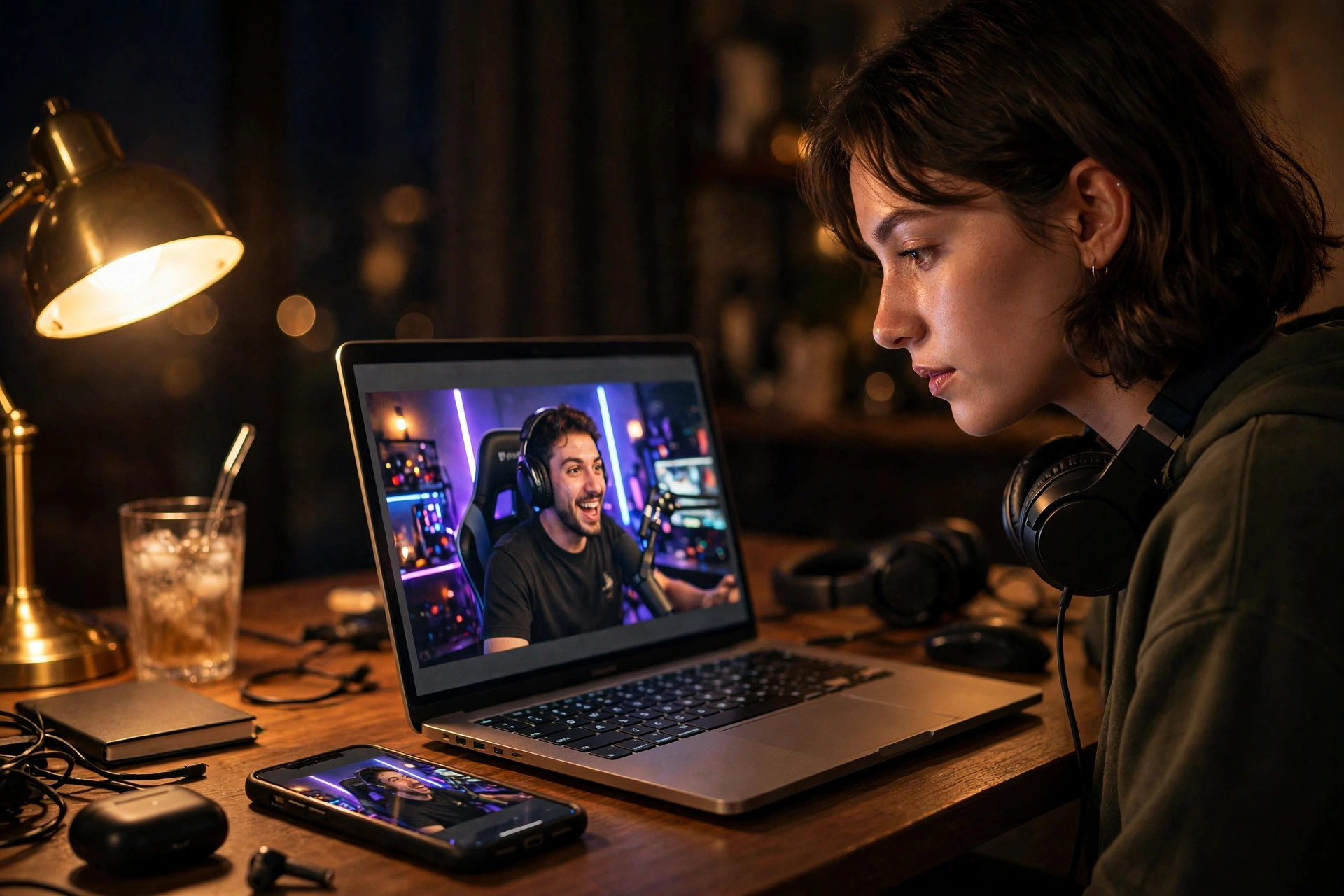
A clipper takes a long video — a Twitch or Kick stream, a podcast, a show — and cuts it into short vertical clips, then posts them on TikTok, YouTube Shorts, Instagram Reels or X. A clipping campaign is a brief from a creator or brand that pays clippers for the views those clips get. The rate is quoted per 1,000 views, usually written as CPM, and the brand sets the rules: which footage you may use, how the clip must be labelled, and how views are counted.
Streamers and brands pay for this because short clips are cheap distribution. NPR reported campaigns from Major League Baseball at $1 per 1,000 views and the prediction market Polymarket at $0.50 per 1,000 views with a $70,000 budget. The streamer N3on reportedly paid more than $1.4 million to 303 clippers over five weeks, at $40 to $50 per 100,000 views. Those are the streamer's own figures, not an audit — but they show the scale at the top end.
The rates, as published in October 2026
- About $1 per 1,000 views is the going rate on campaign marketplaces. Whop puts its average at $1, and the median posted rate across live campaigns tracked on 26 October 2026 was $1 per 1,000 views.
- Brand campaigns on marketplaces such as Vyro showed $1 to $1.50 per 1,000 views when checked in October 2026.
- Streamer-funded campaigns tend to pay less — around $0.40 to $0.80 per 1,000 views in the reports tracked by clipping guides.
- The highest rate NPR found was $25 per 1,000 views, from an AI startup. Treat that as an outlier, not a benchmark.
- Rates differ by platform: campaigns accepting YouTube clips paid a median of about $1.31 per 1,000 views on 25 October 2026, against $1.00 across all platforms.
A posted rate is not a guaranteed wage. Campaigns set a minimum — views or dollars a clip must reach before it earns anything — and a cap, the most a single clip can pay out. Content Rewards, a pay-per-view campaign app on Whop, describes a 7-day earning period and a 3-day hold, so roughly ten days pass before a payout. It also takes 10% of creators' CPM payouts, so the rate you see is not the rate you keep.
Why most clips earn nothing
This is the part the sales pitches skip. In 1.4 million TikToks tracked by one clipping platform, 55% got fewer than 1,000 views and 71% got fewer than 2,000. With a 2,000-view minimum, about seven in ten posts pay nothing. At the other end, 85% of all TikTok views sat beyond a video's first 100,000 views — and if a campaign caps each clip at 100,000 paid views, your one hit earns the same $100 at two million views as it did at 100,000.
Do the maths on the median rate and the picture is plain: at $1 per 1,000 paid views, 100,000 paid views is $100 and one million is $1,000, before minimums, caps and fees. Most beginners get far fewer paid views than they post. As consultant Lia Haberman told the BBC in October 2026, "the vast majority make little to nothing", while a small group earns thousands a month. Nobody publishes payout data across all clippers, so there is no reliable average — anyone quoting one is guessing.
The rules that catch beginners out
- Only approved footage counts. The brand must own or license the footage, and paid clips need a clear disclosure in the video. Reposting someone else's content without a campaign behind it is not clipping — it is just reposting, and platforms are cracking down on it.
- Sponsored clips cannot double-dip. TikTok's Creator Rewards Program excludes sponsored content, so a campaign clip never earns from both the campaign and the platform programme.
- Regulated products carry extra advertising rules. Gambling and financial services campaigns have stricter disclosure requirements, and rules differ by country.
- YouTube Shorts campaigns pay the same per-1,000 rate, but your own channel only earns Shorts ad revenue inside the YouTube Partner Program — 1,000 subscribers and 10 million Shorts views in 90 days, with creators keeping 45% of their pool share.
- Campaign budgets run out. A campaign that paid yesterday can close tomorrow, and the brand approves or rejects each submission before views are paid.
The honest way to approach clipping is as a volume game with a skill filter: post a lot of clips, each good enough to have a chance, and learn which moments actually travel. The clips that break out are usually the ones with a clear hook in the first two seconds and a clean cut — not the ones with the most effects. Track which of your clips pass the campaign minimum and which get rejected, and you will learn faster than any course can teach.
No followers needed — but no guarantees either
Clipping is one of the few ways to earn from short video without an audience of your own, because the campaign pays for views, not followers. That is the attraction — and the risk: views are unpredictable, minimums eat most clips, and no campaign owes you anything. Treat it as a side experiment with real effort behind it, not a salary.
Earn without waiting for a clip to go viral
Clipping rewards the few clips that break out. Verified social tasks pay for real work you complete — no minimum views, no caps, no waiting on an algorithm.
Share this article
eBizEarn Team
Writing for the eBizEarn blog — practical guides on social-media tasks, rewards, and staying safe online.
Related articles
 Getting Started
X Now Pays Creators and Clippers for the Same Clip
X launched native clipping on 9 November: cut 5 to 60 seconds from a video and both you and the original creator can earn. Here are the rules and the catch.
 YouTube
's New Monetization Rules: What Changes for Earners
YouTube is rewriting its monetization rules — a bigger Premium Lite pool, a Shorts payout floor, and a 2027 activity rule. Here is what changes for earners.
 Getting Started
Rumble Promises Creators 90% of Ad Revenue: Read the Terms
Rumble promises up to 90% of video ad revenue in its new Partner Program, but the number is nowhere in the contract. Who qualifies, and what to check first.